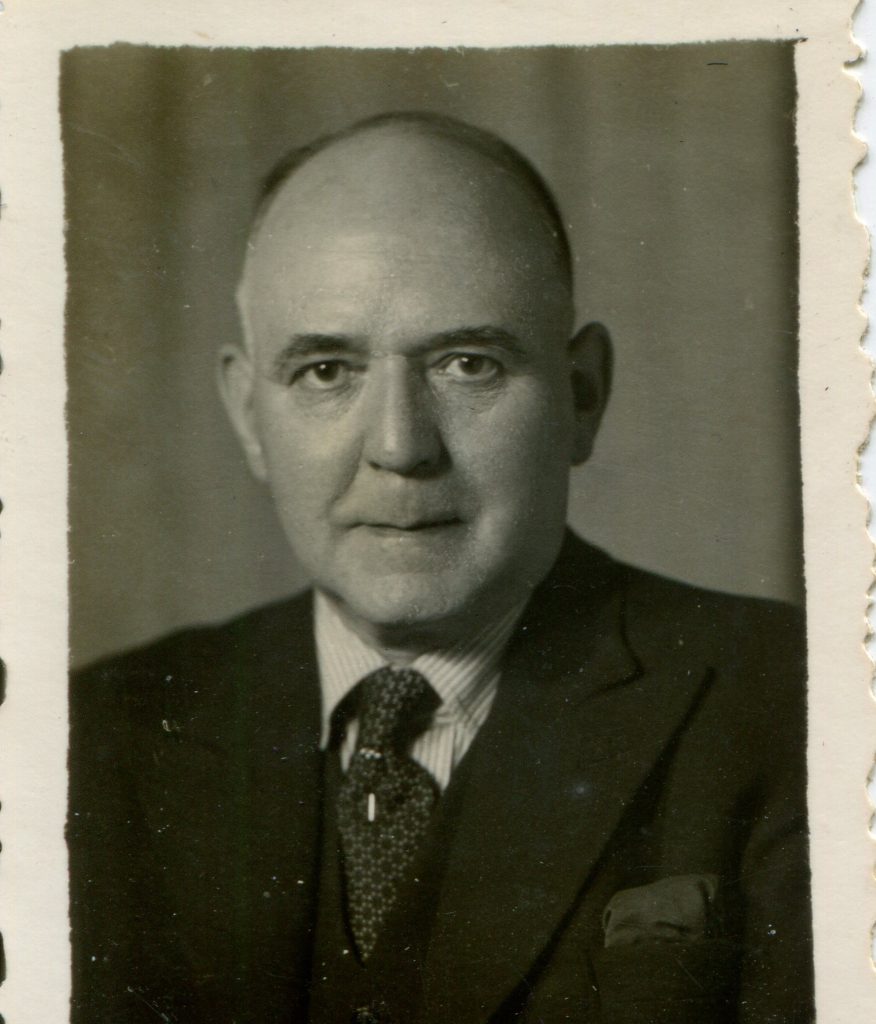
Charles Henry Townley (1892-1969)
I was only eight when my grandfather, Charles Henry Townley (1892-1969) died. As he lived in Kent at the time and only visited a few times a year my memories of him are limited, but I remember his as a generous and loving man. It was only after my Dad’s death that I realised how distant their relationship had been, as it became clear that throughout his youth his father had been largely absent as a colonial civil servant in Nigera and the Gold Coast (now Ghana). There were also times when ny grandmother took trips to Nigeria and the Gold Coast. It is always with some regret that I did not press Dad to talk about his family more before his death.
My grandfather followed his father (also Charles Henry Townley 1867-1944) into the printing trade and at time his territorial unit was mobilised at the outbreak of the Great War, he was employed by E Hulton and Co of Withy Grove, Manchester and was a member of the Manchester Branch of the Typographical Association. During the war he saw service in France, Belgium, Egypt, Galipoli (during which he was invalided home due to Typhoid) and after the armistice in Germany.
On 5 May 1920 he was appointed Assistant Superintendent Government Press in Nigeria. According to the 1923 “Blue Book” for Nigeria he was part of a team of 8 staff headed by the Government Printer and at that time his salary was £495. The Nigeria Handbook 1922 records that the starting salary for an Assistant Superintendent would have been £450 per annum with annual increments of £10 per year. The Paymaster and Timekeeper, Theophilus Alfred Thompson, first employed in 1891 and last promoted in 1911, is likely to have been Nigerian.
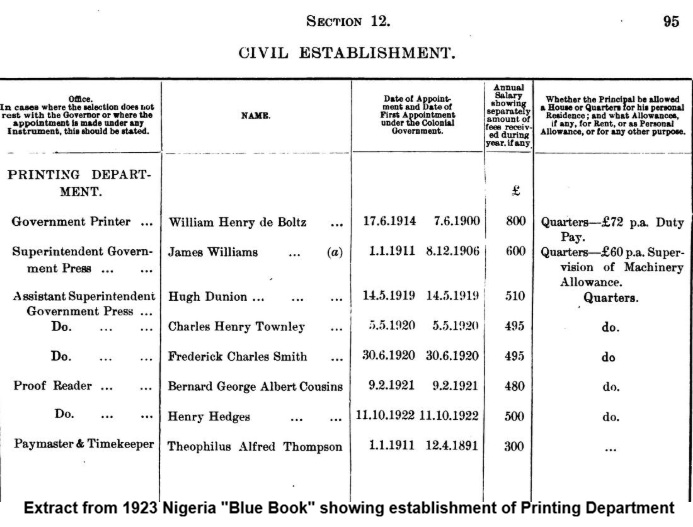
The Nigerian Government Printer was responsible for publishing the weekly Nigeria Government Gazette, which provided information of all official matters. They also also published all legislation applying to the colony, as well as Nigeria law volumes, containing judgements of cases heard before the courts. Nigeria had been progressively surveyed both to provide geographical maps and also provide a geological survey. We do not know how may local staff were employed at that time but in 1908 Annual Report for the office reports the office had 3 “European” staff and 117 local staff, therefore the extent of the work undertaken by the office had presumably increased significantly.
It is perhaps stating the obvious that their was institutional racism in the organisation of the Nigerian Civil Service and my grandfather was a beneficiary of this. This is amplified in a petition by the Nigerian Civil Service Union (representing locally recruited staff), to the British Government to change the rules that prevented non European staff being appointed on merit to posts above “class II” clerkships with salary of around £300. The African Telegraph noted
“Colonial administrators have sedulously drawn a colour line, certain posts, and those the plums of the service. being regarded as open only to Europeans; no African being eligible, despite his attainment or ability or particular suitability to any one particular post. Now this policy appears to us particularly pernicious, because, not only is His Majesty deprived of the services of his able African subjects, but the latter are also unable to demonstrate the falsity of the theory of their incapacity. It is a trite saying that the hour produces the man, and we have a concrete case in India where judicial appointments have been for a long time open to Indians, and the most brilliant luminaries of the Indian Bench to-day are Indians themselves. If, therefore, the opportunity is given to all Africans of attaining the higher offices in the Colonies, we are convinced that there will soon be a crop of able men ready and willing to fill the posts, but so long as this policy of repression is pursued, so long will the false theory flourish, and so long will there he dissatisfaction and discontent.
Similarly, the colonial authorities operated a colour bar segregating different races to live different parts of the townships. This suggests that the segregation that blacks in South Africa experienced under Aparthied, had been more widely practised in the British Empire,
The Governor has power to declare any portion of a township to be European or Non-European reservation or a non-residential area, and a number of townships have been laid out in accordance with the principles of segregation, with beneficial results to the health and comfort of Europeans and natives alike.”1
Chapter XIX of the handbook included “information for newly appointed government officers”, noting that probation for second class officers (which Charles was at this stage) was seven years and if they left their post within three they were responsible for paying their passage to Nigeria, half salary being paid from embarkation with full pay starting on arrival in Nigeria. 1st class officers – usually the more senior posts – were entitled to 1st class passage on ships, with 2nd class officers getting 2nd class passage. In Charles’s case he travelled 2nd class in his first few voyages but in November 1923 his voyage back to Nigeria was 1st class – suggesting he had been promoted from his original post, presumably to the role of Superintendent of the Government Press, who deputised for the Government Printer, when he was on leave.
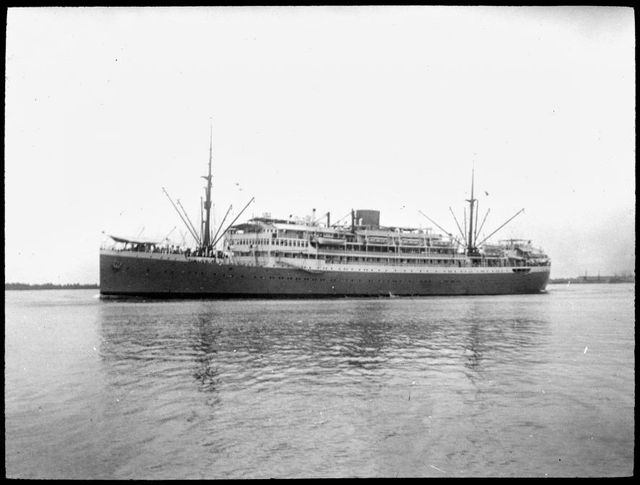
Elder-Dempster liner “Accra” in Lagos harbour used by Charles Townley in the 1930’s
E H Duckworth Collection North Western University
Officers received free furnished accommodation. They had to serve a “tour” of 12 months before going on leave for 4 months, including the voyage to and from Great Britain, although the timing of leave could be affected by the “exigences of the service”, with additional leave being granted for longer periods of service. The handbook also advised that “the Government does not permit junior officers to bring their wives to Nigeria without special permission” and goes on to state that permission is unlikely to be granted for to a newly appointed officer. Rent free did not include charges for rates, electricity, water and “conservancy” fees which for a new officer might total nine pounds per year. Some officers in the administrative service as well as education, police and agriculture were required to pass an examination in a local language relevant to the area of the country they were working in. Pension arrangements were generous, providing a pension of half their final salary after18 years service, with a death in service pension for their wife and dependent children.
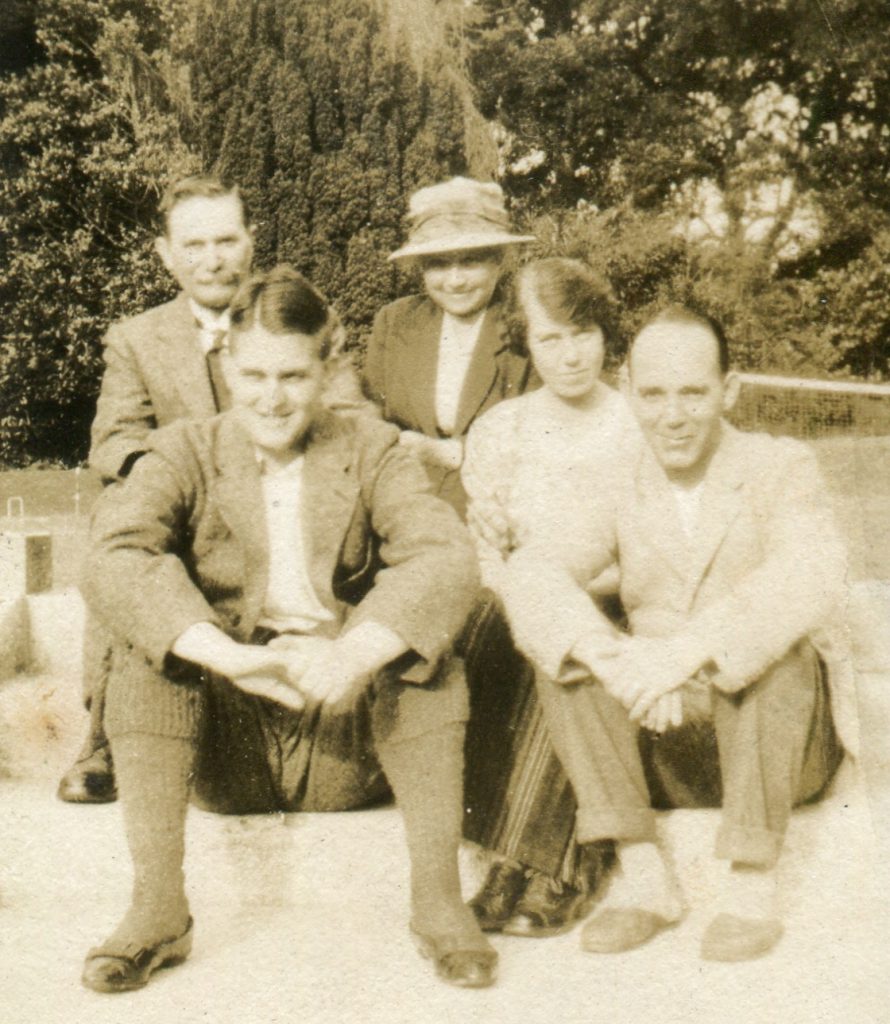
An undated family photograph showing (back row) Charles Henry Townley (1867-1944) with Minnie Townley along with (front row left to right) Bert Townley, Winifred Townley and Charles Henry Townley (1892-1969)
We know from a letter sent from Nigeria (undated but envelope postmarked 1923) that Charles was courting Winifred Clark and that she was a regular visitor to the home of Charles’s parents Charles and Minnie during his time in Nigeria and that on what we think was his next leave in 1925 he married Winifred. Their made their married home at 20 Ennerdale Road, Stretford, Manchester, this may have been Winifred’s parents home. This was one of Lloyd George’s “Homes fit for heroes” post war council housing. At the end of the leave period Winifred and Charles travelled together back to Nigeria. Winifred remained with Charles until she returned to Britain in the summer of 1926 and gave birth to my father Charles Henry Angus Townley, at 20 Ennerdale Road, on 27 November 1926.
In a letter home to his mother on 17 June1926 he talked about his voluntary work :-
“I’m at present on six committees – secretary of one + treasurer of another – technical advisor to the new paper. … The new paper was duly launched on the first of this month. … Still its a great innovation – the first of its kind in this part of the world: and though it is a bit of a “rag” I’m pleased I helped a great deal in its formation. One of my ambitions used to be to own a paper of my own. Though that seemingly cannot be realised, I’m in at the next best.”
His leisure activities otherwise were playing golf at the Lagos Golf Club and Shooting. Additionally, he was active in Freemasonary, having been initiated into Blair Lodge in Manchester on 9 September 1919, of which lodge his father was also a member.
His appointment as the Government Printer for Nigeria was announced by the Colonial Office 10 October 1939 noting that he was previously the Government Printer for the Gold Coast.2 Further research is required to add to this account.
- The Nigeria Handbook 1919, pp 99, https://archive.org/details/nigeriahandbookc00nige/page/98/mode/2up ↩︎
- “The Colonial Service”, The Scotsman, Tuesday 10 October 1939, p10. ↩︎